
How to Reduce Payment Processing Costs: 7 Proven Strategies for Businesses
Learn 7 proven ways to reduce payment processing fees, avoid hidden costs, and optimize your payment setup to save your business money.
1/21/20263 min read
Running a business means keeping a close eye on expenses, and one of the most commonly overlooked costs is payment processing fees. Many business owners assume these fees are fixed or unavoidable, but in reality, there are several ways to reduce what you’re paying without changing how you accept payments.
If you’ve already read our guides on how payment processing works and payment processing fees explained, this article will show you how to take action and start saving.
Below are 7 proven strategies businesses use to lower processing costs while maintaining a smooth customer experience.
1. Understand Your Current Pricing Model
Before you can reduce fees, you need to understand how you are being charged.
Most businesses fall into one of the following pricing structures:
Interchange plus pricing
Tiered pricing
Flat rate pricing
Many merchants overpay simply because they do not realize which model they are on.
If you are unsure, start by reviewing your statement or reading our guide on payment processing fees explained.
Understanding your pricing model helps identify hidden markups and unnecessary add-ons.
2. Review Your Monthly Statements Carefully
Your merchant statement contains important information, but it is often difficult to read.
Look for:
Non-qualified or downgraded transaction fees
PCI non-compliance fees
Monthly minimums
Batch or authorization fees
Statement or gateway fees
Many businesses discover they are paying hundreds of dollars per year in unnecessary charges. Businesses are also required to follow security guidelines set by the PCI Security Standards Council, and non-compliance can lead to additional monthly fees or penalties.
If your statement feels confusing, that is usually a warning sign.
3. Optimize How Payments Are Accepted
The way a transaction is processed directly affects the fee you pay.
Card-present transactions using chip or tap methods are typically the least expensive. Manually keyed or online transactions cost more due to higher fraud risk.
To reduce costs:
Use chip or tap whenever possible
Avoid manual entry
Ensure terminals are EMV compliant
Enable AVS and CVV for online payments
These small changes can lead to meaningful savings over time.
4. Avoid Unnecessary Add-On Fees
Many processors include extra charges that provide little value.
Common examples include:
PCI compliance programs with inflated fees
Non-compliance penalties
Monthly service or statement fees
Equipment leasing contracts
Equipment leases in particular are often one of the most expensive mistakes businesses make. Purchasing hardware outright is almost always more cost effective.
5. Choose the Right Pricing Strategy
If your margins are tight, cost recovery programs may help when implemented correctly.
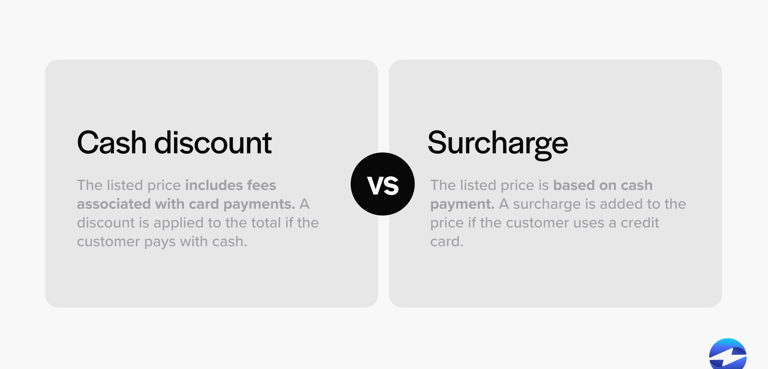
Cash Discounting
Customers receive a discount for paying with cash. This method is compliant in all states and commonly used in retail and restaurant environments.
Surcharging
A fee is added to credit card transactions. This method is regulated and must follow strict card network rules.
Improper setup can lead to compliance issues or customer dissatisfaction, which is why professional configuration is important. Credit card surcharging is regulated by the card networks, and businesses must follow rules set by providers like Visa to remain compliant.
6. Match Your Processor to Your Business Type
Not all processors are designed for every business.
A retail store, online business, medical office, and high risk merchant all require different setups. Choosing the wrong provider can result in higher fees, poor support, or limited functionality.
The right processor should:
Match your business model
Offer transparent pricing
Integrate with your POS or accounting tools
Scale as your business grows
This is why many businesses benefit from processor-agnostic guidance rather than being locked into one provider.
7. Get a Professional Payment Review
One of the most effective ways to reduce costs is to have a professional review your current setup.
A proper review can uncover:
Hidden fees
Incorrect rate classifications
Outdated pricing models
Opportunities for optimization
This is exactly what we help businesses with at Harbor Payment Solutions.
Final Thoughts
Payment processing does not have to be confusing or expensive. With the right setup and a better understanding of your fees, most businesses can reduce costs without changing how they operate. The Federal Trade Commission also emphasizes transparency in pricing and fee disclosure, which you can review in their business guidance resources.
If you would like a second opinion on your current processor or statement, we are happy to help.
👉 Contact us here for a free payment review.
Ready to Improve Your Payment Processing?
Start with a free consultation and see how Harbor Payment Solutions can help your business save money and scale with confidence
© 2025. All rights reserved.
Professional, transparent payment processing services for businesses across the United States. Processing services provided through trusted processing partners. Harbor Payment Solutions operates as a consulting and advisory firm.
Powered by FX Web Ventures